
Ambassador Spotlight:
2nd June 2025
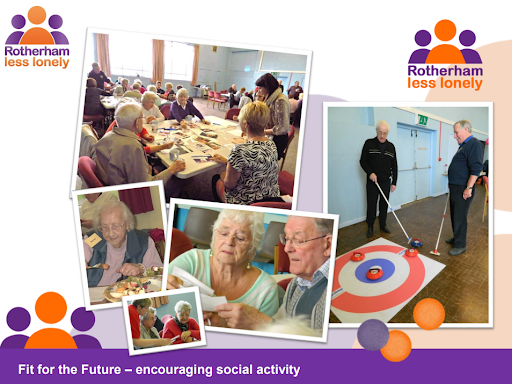
Hello, I’m Alison. I am delighted to be one of the Hub’s new ambassadors having been working in the field of loneliness for more than a decade. This started when I was at Rotherham Council with their Rotherham Less Lonely campaign, building on grass-roots community assets to create a social movement to reduce loneliness. I then moved to Public Health England (now part of the Department of Health and Social Care) where my involvement in loneliness continues as the regional lead for healthy ageing and for public mental health. I am a novice, but increasingly obsessed knitter and I fuel my work and knitting, with plenty of cups of tea. In my role at the Department of Health I work with local authorities across the Yorkshire and Humber region. Loneliness is a key issue in both of my topic areas and I work with the council leads to share research and best practice, facilitate collaboration and, crucially, to feed their frontline experiences back to policymakers in the Department. In many ways, my role is to be a human version of the Tackling Loneliness Hub, which is one of the reasons I was keen to take on the role of ambassador. Whilst I am keen to share good work from my region on the Hub, I will also be looking to learn from my fellow ambassadors and to make sure the wealth of information on the Hub is disseminated widely.
As a public health specialist I need to consider health inequalities in all my work, and loneliness is no exception. Loneliness is both a driver of health inequalities (a Dutch study found that it explained a fifth of chronic disease, more than a quarter of poor self-rated health and half of psychological distress inequalities between the lowest and highest socioeconomic groups. Meisters et al, 2021), as well as being driven by inequality (some groups are more likely to experience loneliness than others, such as members of ethnic and racially minoritised groups, people with disabilities, carers and unemployed people. Wales Centre for Public Policy, 2023).
I see one aspect of my role as ambassador to make sure these inequalities remain uppermost in the Hub’s work and that we promote evidence of what works to reduce or mitigate some of these unfair, systematic differences. Interventions to address loneliness that focus only on working with individuals, and don’t consider the structural drivers of loneliness, will only ever have limited impact on population health.
One of the biggest challenges my colleagues in local authorities face is identifying those who are lonely. There remains a stigma in admitting that you feel lonely, and however good the interventions on offer, if people are reticent in coming forward for support, we will only reach a small proportion of those who could benefit.
What we really need is a way to mitigate loneliness by stealth – by offering opportunities for engagement and participation in the community that brings connection, without labelling them as a loneliness intervention.
The Five Ways to Wellbeing for improving mental and emotional health emphasises the importance of social connections so if we can develop social spaces within our communities, where people can make these links, we will make a difference for people – lonely or not. Which is where my love of a good cup of tea comes in.
Take cafés for example; there is nothing nicer than going to a café for a cup of tea (coffee is also acceptable if that is your preference). But going into one alone, in some places you can feel uneasy; – you might take up a table that could be used for a larger group, then follows the feeling of pressure to leave immediately after you finish your drink, and don’t even think about saying anything to other customers!
In my role at the Department of Health I work with local authorities across the Yorkshire and Humber region. Loneliness is a key issue in both of my topic areas and I work with the council leads to share research and best practice, facilitate collaboration and, crucially, to feed their frontline experiences back to policymakers in the Department. In many ways, my role is to be a human version of the Tackling Loneliness Hub, which is one of the reasons I was keen to take on the role of ambassador. Whilst I am keen to share good work from my region on the Hub, I will also be looking to learn from my fellow ambassadors and to make sure the wealth of information on the Hub is disseminated widely.
As a public health specialist I need to consider health inequalities in all my work, and loneliness is no exception. Loneliness is both a driver of health inequalities (a Dutch study found that it explained a fifth of chronic disease, more than a quarter of poor self-rated health and half of psychological distress inequalities between the lowest and highest socioeconomic groups. Meisters et al, 2021), as well as being driven by inequality (some groups are more likely to experience loneliness than others, such as members of ethnic and racially minoritised groups, people with disabilities, carers and unemployed people. Wales Centre for Public Policy, 2023).
I see one aspect of my role as ambassador to make sure these inequalities remain uppermost in the Hub’s work and that we promote evidence of what works to reduce or mitigate some of these unfair, systematic differences. Interventions to address loneliness that focus only on working with individuals, and don’t consider the structural drivers of loneliness, will only ever have limited impact on population health.
One of the biggest challenges my colleagues in local authorities face is identifying those who are lonely. There remains a stigma in admitting that you feel lonely, and however good the interventions on offer, if people are reticent in coming forward for support, we will only reach a small proportion of those who could benefit.
What we really need is a way to mitigate loneliness by stealth – by offering opportunities for engagement and participation in the community that brings connection, without labelling them as a loneliness intervention.
The Five Ways to Wellbeing for improving mental and emotional health emphasises the importance of social connections so if we can develop social spaces within our communities, where people can make these links, we will make a difference for people – lonely or not. Which is where my love of a good cup of tea comes in.
Take cafés for example; there is nothing nicer than going to a café for a cup of tea (coffee is also acceptable if that is your preference). But going into one alone, in some places you can feel uneasy; – you might take up a table that could be used for a larger group, then follows the feeling of pressure to leave immediately after you finish your drink, and don’t even think about saying anything to other customers!
 The Chatty Café Scheme is a great initiative you may already be aware of, where participating venues provide ‘Chatter and Natter’ tables where volunteers meet those who want to get together and chat. The issue that arises here is that the capacity of volunteers and venues means that sessions are scheduled and limited, and it still requires people to ‘out’ themselves as lonely.
However, if you get the atmosphere of any café right,you have a powerful tool for reducing loneliness without running a specific intervention.
Take my local café here in Sheffield – Café 9 in Nether Edge. It is a little oasis of warmth, with mismatched furniture, masses of plants, eclectic music, great tea, home-made cookies and cakes, friendly staff and (I think, crucially for encouraging connection) pencils and copies of the Guardian Quick Crossword at the counter.
The Chatty Café Scheme is a great initiative you may already be aware of, where participating venues provide ‘Chatter and Natter’ tables where volunteers meet those who want to get together and chat. The issue that arises here is that the capacity of volunteers and venues means that sessions are scheduled and limited, and it still requires people to ‘out’ themselves as lonely.
However, if you get the atmosphere of any café right,you have a powerful tool for reducing loneliness without running a specific intervention.
Take my local café here in Sheffield – Café 9 in Nether Edge. It is a little oasis of warmth, with mismatched furniture, masses of plants, eclectic music, great tea, home-made cookies and cakes, friendly staff and (I think, crucially for encouraging connection) pencils and copies of the Guardian Quick Crossword at the counter.
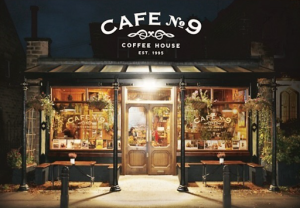 Yes, the welcoming ambience that has been created over many years is important, but the crosswords provide a conversation starter between you and whoever else may be sharing your table or sitting nearby: “Have you got 11 across? Fastidious – 5 letters.” “Is that the cryptic? You’re brave…” There are many who visit daily – sometimes having arranged to meet others, sometimes alone to see who else might be there to strike up a conversation. I have no idea if any of them are lonely, but surely that is the whole point?
This café – and probably countless others across the country – offers a place where people who may feel lonely every day, occasionally, or possibly never, can come and have a meaningful interaction with others, and that is something we should celebrate.
Meisters R, Putrik P, Westra D, Bosma H, Ruwaard D, Jansen M. Is Loneliness an Undervalued Pathway between Socio-Economic Disadvantage and Health? Int J Environ Res Public Health. 2021 Sep 28;18(19):10177. doi: 10.3390/ijerph181910177. PMID: 34639477; PMCID: PMC8508269.
Wales Centre for Public Policy. 2023. Loneliness inequalities evidence review. WCPP-REPORT-Loneliness-Inequalities-Evidence-Review.pdf
Yes, the welcoming ambience that has been created over many years is important, but the crosswords provide a conversation starter between you and whoever else may be sharing your table or sitting nearby: “Have you got 11 across? Fastidious – 5 letters.” “Is that the cryptic? You’re brave…” There are many who visit daily – sometimes having arranged to meet others, sometimes alone to see who else might be there to strike up a conversation. I have no idea if any of them are lonely, but surely that is the whole point?
This café – and probably countless others across the country – offers a place where people who may feel lonely every day, occasionally, or possibly never, can come and have a meaningful interaction with others, and that is something we should celebrate.
Meisters R, Putrik P, Westra D, Bosma H, Ruwaard D, Jansen M. Is Loneliness an Undervalued Pathway between Socio-Economic Disadvantage and Health? Int J Environ Res Public Health. 2021 Sep 28;18(19):10177. doi: 10.3390/ijerph181910177. PMID: 34639477; PMCID: PMC8508269.
Wales Centre for Public Policy. 2023. Loneliness inequalities evidence review. WCPP-REPORT-Loneliness-Inequalities-Evidence-Review.pdf
Biography: