
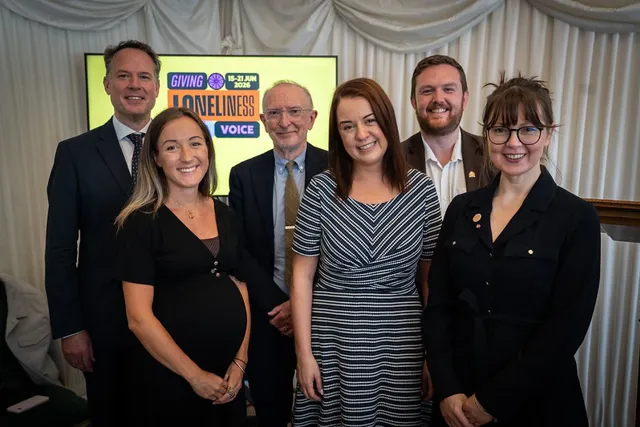
Loneliness is a national challenge – we must give our young people a different future
29th June 2026
Drawing inspiration from Jo Cox, civil society and youth minister, Stephanie Peacock MP sets out what the government is doing to enhance social cohesion and the support for young people to make meaningful, positive connections.
Ten years ago this week, Jo Cox was tragically murdered.
Her belief – that we have “more in common than that which divides us” – has never felt more
urgent. At a time when many people feel disconnected from one another, loneliness has
become one of the defining challenges of our age.
As we mark Loneliness Awareness Week, we are more connected than at any point in
history, yet people report feeling unseen and detached from the communities around them.
Nowhere is this challenge more apparent than among young people. The Department for
Culture, Media and Sport recently carried out a major ‘state of the nation’ survey of more
than 14,000 young people which found that they are the most digitally connected generation
ever, yet also among the most likely to feel lonely.
As the Prime Minister said on Monday, the social media ban for under-16s is not just about
reducing screen time or preventing harm. It’s about giving children back their childhoods.
More time with friends, more opportunities for sport, clubs and volunteering. More real life.
Young people have told us what they need: somewhere to go, something to do and
someone who cares about them. So we listened.
Our National Youth Strategy published in December, titled ‘Youth Matters’, is backed by
£500 million of investment – including £350 million to build or refurbish up to 250 youth
facilities across the country. These are spaces where friendships will be formed, where
young people can find mentors, and where they can feel safe.
Evidence shows that as many as one in five teenagers don’t have a trusted adult in their
lives. That has to change.
We’re working closely with The King’s Trust to connect young people with mentors, practical
experience and pathways into work, while our ‘Every Child Can’ programme will invest
£132.5 million in activities that build skills, confidence and relationships. A further £400
million is already going towards building or revamping grassroots sports facilities across the
country.
There is also a growing crisis of loneliness among boys and young men. One in four boys
say they feel lonely at least some of the time. Too many continue to struggle in silence, and
that isolation can make them vulnerable to harmful online influences such as the
manosphere.
That’s why our newly published Social Connection Framework will help people who work
with boys and young men to identify those at risk of loneliness and give them support. And
through our ‘TeamUp’ campaign, backed by role models including Jonny Wilkinson and Luke
Littler, we’re encouraging sports clubs to create welcoming spaces where young men and
boys can connect and build confidence.
Over the coming years, you’ll see us investing in the places that bring whole communities
together: grassroots sport, youth clubs, libraries, museums and heritage sites. Through our
Pride in Place programme, we will invest up to £5.8 billion over the next decade to tackle
deep-rooted social, economic and employment challenges, and strengthen communities.
The government has an important responsibility, but it cannot do this alone. Businesses,
charities, faith groups, local leaders and community organisations all have a vital role to play.
But Jo Cox’s words remind us why it matters. Social connection is not a nice-to-have. It is
fundamental to the kind of country we want to be, and this government is determined to
make it a reality.
Stephanie Peacock is the Minister for Sport, Tourism, Civil Society and Youth.