
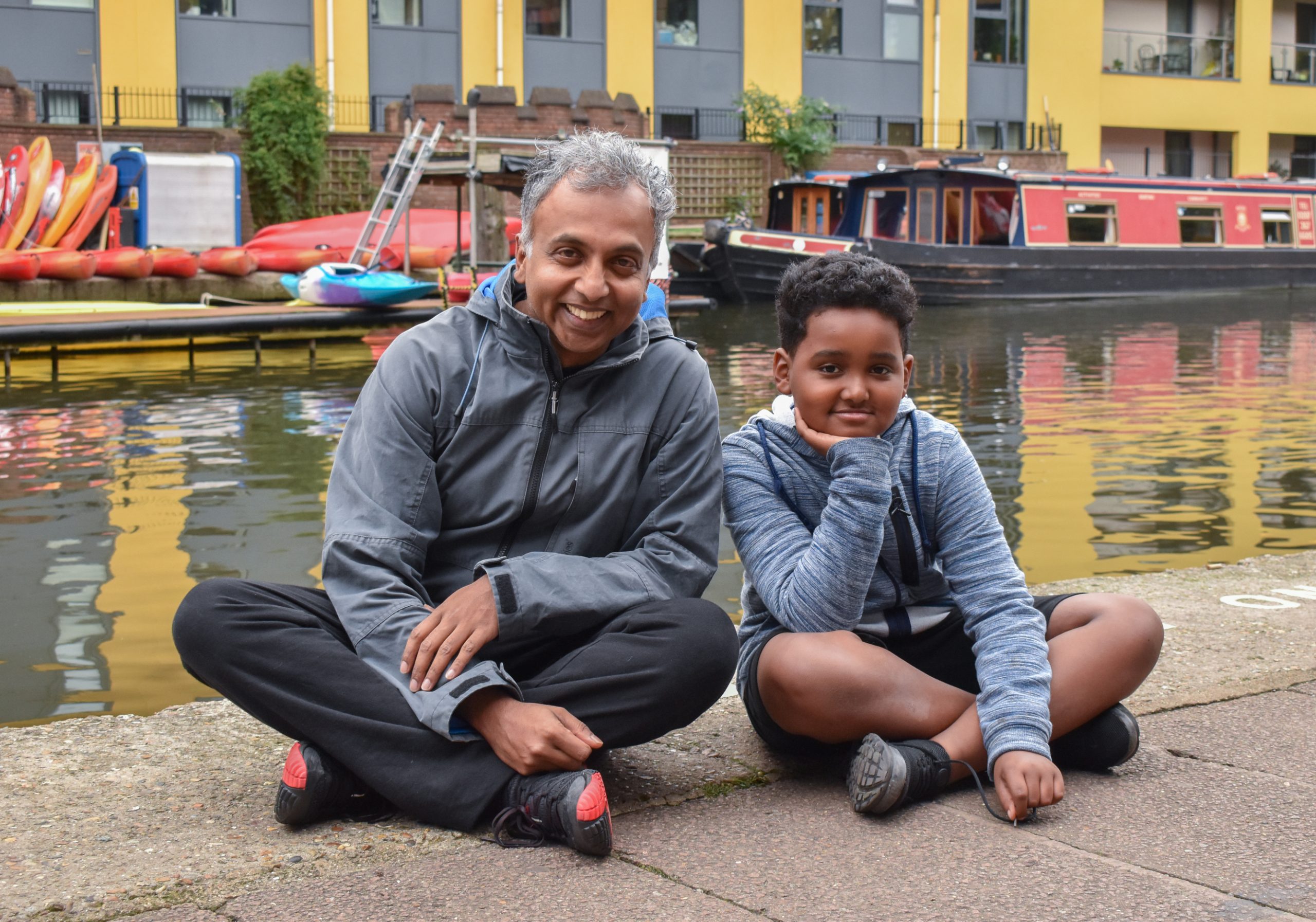
How Mentoring Helps Reduce Loneliness for Men
29th January 2026
By Amaria-Rae Branche, Marketing and Comms Officer, TKN.
with contributions from Damon and Richie, mentors
Loneliness is unconsciously assumed to be something that only affects people later in life. In reality, it finds us at any age – from children finding their place in the world, to adults navigating busy lives that still leave them feeling disconnected. Research by the Co-op Foundation & British Red Cross has found that young people report some of the highest levels of loneliness, however, a lot of them feel unable to talk openly about it.
At The Kids Network, we see first-hand how the power of mentoring creates space for connection to thrive. Not through grand gestures, but through someone making a choice to show up, week after week. When a young person has a trusted adult in their corner who listens, notices, and cares, those feelings of isolation quieten before loneliness has the chance to take root.
That belief sits at the heart of our new partnership with the Campaign to End Loneliness. Together, we’re spotlighting mentoring as a practical and preventative way to tackle loneliness, by supporting children while also offering connection, purpose, and belonging to the adults who volunteer as mentors.
As conversations around men’s wellbeing continue to grow particularly during moments like Movember, we spoke with some of our male mentors about connection, role models, and what mentoring has meant to them.
Why Male Mentors Matter
Mentors play an important role in children and young people’s lives. They bring something that feels increasingly rare to come by in today’s world: time, consistency, and attention. By keeping to plans, listening without judgement, and showing up reliably, mentors build trust with their mentee. Over time, that foundation of trust creates a sense of safety allowing confidence to blossom.
For children, having a positive and consistent male presence offers a lived example of what care, respect, and emotional openness can look like. Through everyday interactions and shared experiences, mentors model healthy relationships and reliability, shaping how young people understand connection.
In a society where men can often feel disconnected or isolated, mentoring helps to create space for genuine, human connection rooted in shared time and mutual respect.
Why Men Choose to Become Mentors
For many men, the decision to mentor begins with a simple question: can I make space for this? It’s rarely a decision made with certainty, and more often one rooted in reflection, thinking back to their own childhoods, the people who showed up for them, and what it might mean to offer that same consistency to someone else.
One mentor shared how growing up with strong male role models helped him feel supported and confident in shaping his own story. Mentoring felt like a natural way to pass that baton of support on – to be present for a little Londoner who could benefit from a positive role model.
Alongside these motivations, we hear practical concerns, with time and commitment being the most common. Many mentors have busy lives, balancing work, studies, or family commitments. Yet time and again, mentors tell us that committing a few hours consistently each week has a meaningful impact, not just for their mentee -for themselves too.
How Small Moments in Mentoring Create Big Change
The impact of mentoring doesn’t usually show up in a single defining moment. Its impact is found in the small, everyday experiences – a walk to the park, trying something new together, or picking up a conversation right where it left off.
One mentor shared a moment that captured this perfectly.
“My mentee has for a long period of his life been afraid of dogs due to an unfortunate experience. One day we went to a park after having a deep conversation about his fear. He noticed a few dogs and asked me if it would be okay to meet them and ask to interact with their dog. This made me very happy to see the courage in his eyes to do something voluntarily such as this.”
Moments like these are built on consistency. By showing up and remaining present, mentors help create stability. That stability helps reduce feelings of isolation, creating space for confidence to grow. When children feel supported, they’re open to trying new things, speaking freely, and taking small risks.
Breaking Down Barriers to Male Mentoring
When we ask male mentors about their initial hesitations, concerns often centre around time and confidence. There’s a common assumption that mentoring requires specialist skills or the “right” background. In reality, mentoring is rooted in three simple qualities: consistency, curiosity, and care.
One mentor put it plainly:
“Mentoring isn’t about having loads of free time. It’s about choosing to use a small part of your time in a way that actually matters. Everyone is busy … it’s what you decide is worth making space for.”
Mentors show us that it’s presence, not extraordinary actions that makes the difference.
“Kids benefit from seeing healthy masculinity in action: someone who’s patient, reliable, empathetic, and engaged.”
When boys see men listen, communicate, and show empathy, it gives them permission and a safe space to do the same.
The message from those already mentoring is clear: you don’t need to change your life to make a difference, you simply need to make space for someone else in it.
Mentoring as a Two-Way Solution to Loneliness
Connection sits at the heart of mentoring, it’s one of the most effective ways to prevent loneliness. Feeling heard, seen, and valued by someone who chooses to spend time with you can make a profound difference.
For children, mentoring gives them a relationship outside of school and home. It’s a space where they feel understood and supported. Knowing that their mentor is there by choice, not obligation, helps build trust and a sense of belonging.
For mentors, the benefits are just as real. While London is a buzzing, multicultural city, many people struggle to find connection here. One mentor reflected:
“It’s a very busy vibrant city, but it can also be one of the loneliest places in the world.”
At The Kids Network, our programme is designed so mentoring can be meaningful for both mentor and mentee. In fact, 100% of our mentors say they believe that they can create a positive change in their community, by stepping outside of their own bubble and into a shared world with someone else.
But mentoring is not a one-way relationship. For those who volunteer, it brings them something equally meaningful: purpose.
One mentor reflected:
“Being a symbol of guidance for a young person is not easy, but [it’s] fulfilling in the sense of being there for another, rather than just for myself.”
This is why mentoring aligns so closely with the mission of the Campaign to End Loneliness.
We’re proud to shine a light on mentoring as a powerful way to build connection, purpose, and belonging. By working together, we hope to encourage more people, particularly men, to see mentoring as a meaningful way to support others while also strengthening their own sense of connection.
Tackling loneliness starts with just one relationship.
“Just ‘being’ for 3 hours one day a week, promoting the welfare of another male, gains my own self-worth, just as much as the person I mentor.”
If you are interested in finding out more about our programme or you would like to apply, visit The Kids Network’s website If you have any questions or would like to speak to a member of the team, contact TKN at info@thekidsnetwork.org.uk
Socials
Stay connected with TKN for updates, stories, and opportunities to get involved: